Salience for PHP
Salience works with any git repository — but it understands PHP projects best. If your day is Symfony or Laravel, Composer and PHPUnit, this is the five-minute tour of what it does for you specifically.
Everything here sits on top of the core app: My Work, the Map, worktree cleanup and the MCP server are language-agnostic and work the same for every project.
The right tests, cued by your changes
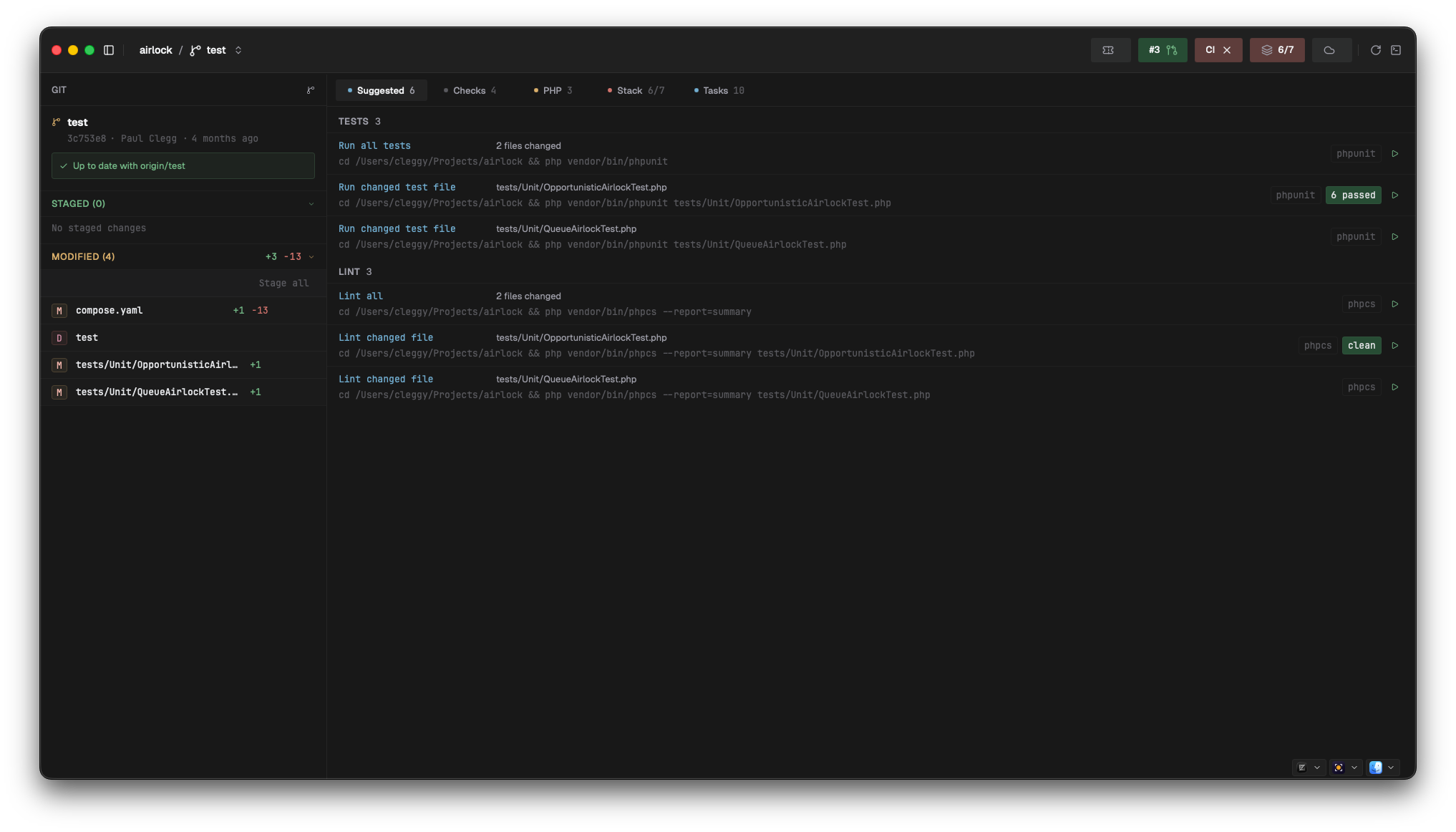
Change a file and the Build page cues the runners it detected — PHPUnit, Pest, PHPCS — scoped to what you touched. Each cue prints the exact command it would run, including the docker compose exec prefix when your PHP runtime lives in a container rather than on your host. Hit Run, the output streams into the console, and the result stays on the row as a chip (763 passed · 1 skipped).
One-click health checks
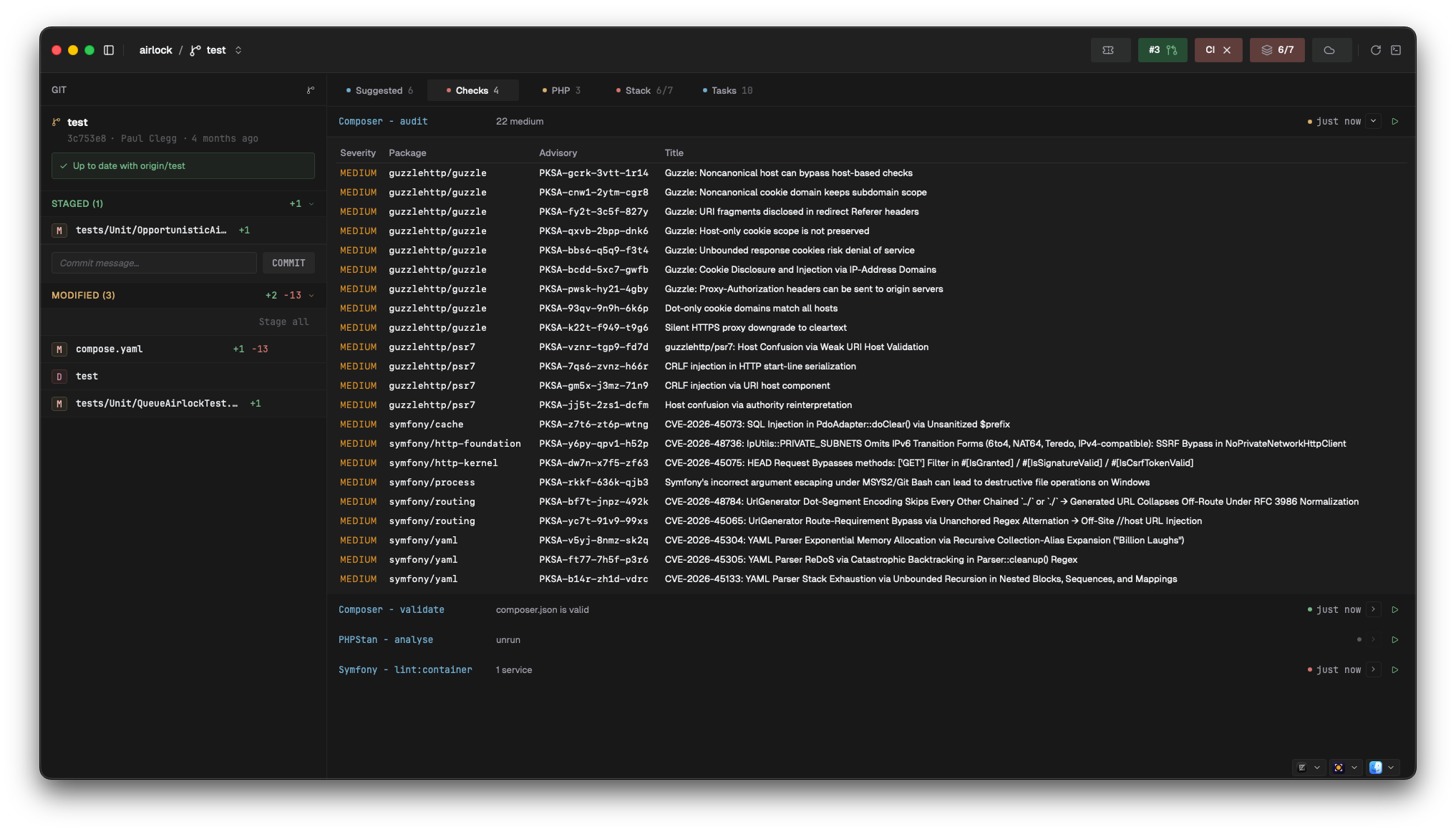
Seven checks ship today, and every one of them is PHP (Build → Checks):
| Check | Tool |
|---|---|
| Composer - audit | composer audit |
| Composer - validate | composer validate |
| Doctrine - Schema Validation | doctrine:schema:validate |
| Symfony - lint:container | lint:container |
| PHPStan - analyse | PHPStan |
| Psalm - analyse | Psalm |
| Mago - analyze | Mago |
Each appears only when your project shows evidence of that tool, never auto-runs, and caches its last verdict — so the tab answers "what did PHPStan say last time?" without running anything.
Looks like API docs. It's your actual call graph
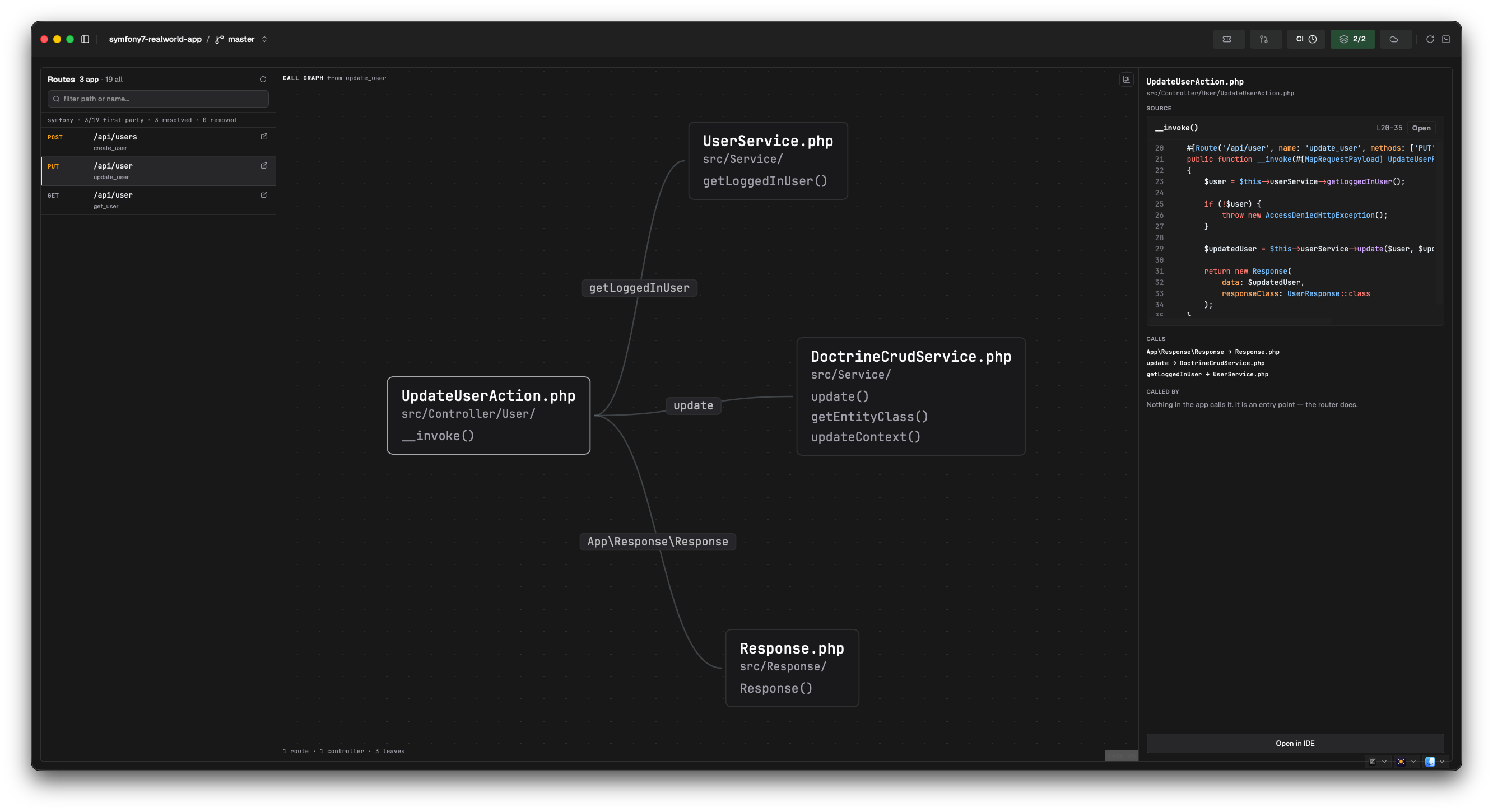
Salience indexes your symbols using the autoload roots in your composer.json — the first index builds automatically when you add the project — then syncs routes with your framework's own dump: debug:router for Symfony, route:list for Laravel. Thanks to Mago, the Rust-based PHP toolchain, Salience builds a real AST of your codebase — the graph is derived from parse trees, not regexes. The result reads like your API docs: a filterable list of every route. Except each row opens the code behind it — pick a route and Salience walks the call graph from its controller and draws the files involved: a map of the code paths that route depends on, something grep can't give you. ⌘-click any node to open it in your IDE.
Nothing is installed in your project to make this happen — no composer package, no mounted route, no instrumentation, and you never have to run the app. Salience reads the code from outside, and the graph stays on your machine.
Toolchain doctoring
The Build page grows a PHP tab when something is off with the runtime itself: an extension your project needs that isn't declared or isn't loaded, lockfile drift, a missing binary. It tints red when an issue is high severity, amber when it can wait.
Symfony & Composer recipes
The command palette carries recipes for the tools it detects — Symfony console commands and Composer actions, ready to run with ⌘K.
Your agent speaks PHP too
The same code graph ships over the MCP server: find_definition, find_references, find_callees, find_implementations, find_supertypes, get_file_outline, describe_symbol. Point Claude, Codex or Cursor at it and your agent navigates by type hierarchy instead of grep — alongside the same joined branch, PR and ticket context you see.
What "PHP today" means
The data model isn't PHP-specific — PHP is simply the first language with a full producer. Suggested actions already cue Jest and Playwright for Node projects, and deeper support for other languages follows the same path the PHP support took.